


TEENAGE SEX AND DEATH AT CAMP MIASMA Review

Updated: Aug 21

Kris (Hannah Einbinder) is a young filmmaker who is hired to reboot the cult 1980s slasher Camp Miasma. In preparation for the film, she tracks down Billy Presley (Gillian Anderson), the actress who played the original movie’s final girl and now lives on the same grounds where it was filmed. As Kris spends more time with Billy and becomes more obsessed with the history of Camp Miasma, the line between the movie and reality starts to disappear. What begins as a straightforward attempt to revive an old horror franchise slowly turns into something much stranger, exploring sex, identity, trauma, and the lasting effect movies can have on the people who make and watch them.
There are deeply personal elements to Teenage Sex and Death at Camp Miasma. The killer is a misunderstood young kid at a summer camp, struggling with identity and being marginalized because of it. The protagonist is a filmmaker who seemingly hides behind her work and suppresses her emotions, prioritizing artistic excellence and her own ideas of ethical conduct. There is a palpable tension from the opening of the film, largely coming from our protagonist’s restraint. Her filmmaking becomes a form of escapism, a way to intellectualize emotions that she doesn’t want to confront directly. This is where the horror becomes so effective, because the film’s violence and grotesque imagery begin to feel like manifestations of everything she is suppressing. The killer isn’t simply a monster for the protagonist to uncover; there is a deeper connection between the two, with both characters struggling with identities they don’t fully know how to confront. Schoenbrun uses the conventions of the slasher to bring these internal conflicts to the surface, making the horror feel strangely intimate.
The film’s exploration of intimacy is where I found the connection between Kris and Billy most interesting. Kris is in a relationship with a partner who engages in polyamory, and it becomes apparent that she isn’t entirely comfortable with that dynamic. More broadly, Kris has a difficult time engaging with anyone in an intimate setting, seemingly using her filmmaking as another way to keep people at a distance. Billy, on the other hand, carries trauma from what she experienced while making the first Camp Miasma as a young girl. Now older, she has seemingly reclaimed control over her physical self. There is a spiritual connection between Kris and Billy, but I would argue that the root of their connection is physical intimacy, filtered through the language of a slasher film. Sex, violence, fear, and vulnerability have always existed alongside one another in the slasher genre, and Schoenbrun uses that relationship to explore what it means to actually feel comfortable in your own body.
Hannah Einbinder is great. She brings this real vulnerability to her character’s tendency to hide behind her art that feels incredibly relatable. She also gets a few moments to let that comedic brilliance we’ve seen from her before shine through. Gillian Anderson is fabulous, and she is in total command here. She has such an undeniable presence, and her character is so mysterious yet always calming. She has a great backstory and gives us an absolutely dynamite take on a Norma Desmond-type character with some huge shake-ups. Also, a Patrick Fischler cameo is just always going to be a plus.
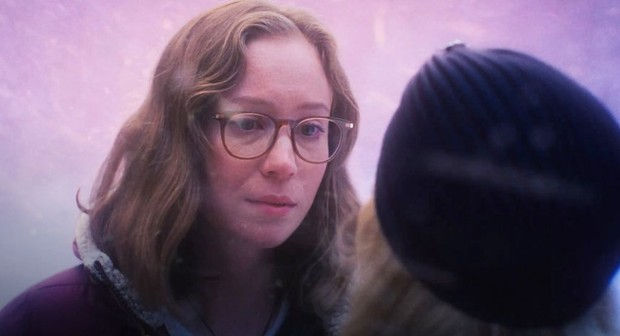
The film has a wild color palette and really dips its toes into fantastical elements until it is completely submerged within. The production design is really the technical standout. The sets are just sheer perfection given the slasher '80s aesthetic the film was going for. The film is visually a feast for the eyes, and a large part of this is the world-building that goes on. I want to be a part of this world, even the slasher elements; it is all very enticing.
Death is obviously the other half of the equation here, and I think Schoenbrun does a really interesting job of making it feel connected to intimacy. The kills are obviously grotesque, but there is something strangely sensual about the way the film presents the body, constantly blurring the line between pleasure and pain. The slasher has always had this weird relationship with sex, young bodies, and death, and Camp Miasma really leans into that connection. The violence feels like an extension of everything these characters are struggling to confront, rather than just being there for the sake of having brutal kills. There is something oddly beautiful about the way Schoenbrun handles all of this, even when the film is being pretty gross.
Jane Schoenbrun has officially cemented themself as a defining voice of the decade. Their cinematic language is so singular; the way horror meshes with repression into such an entertaining thrill ride is seriously impressive. Stripped down, the film is about two broken people helping each other put the pieces back together. The film buries this under some of the most gratuitous symbolism you will see in a film this year. It’s a movie about movies, made by movie lovers for movie lovers.
🍿 SCORE = 88 / 100



Comments