


BUTTERFLY JAM Review
- Dan + Julia Reyes
- 2 days ago
- 3 min read

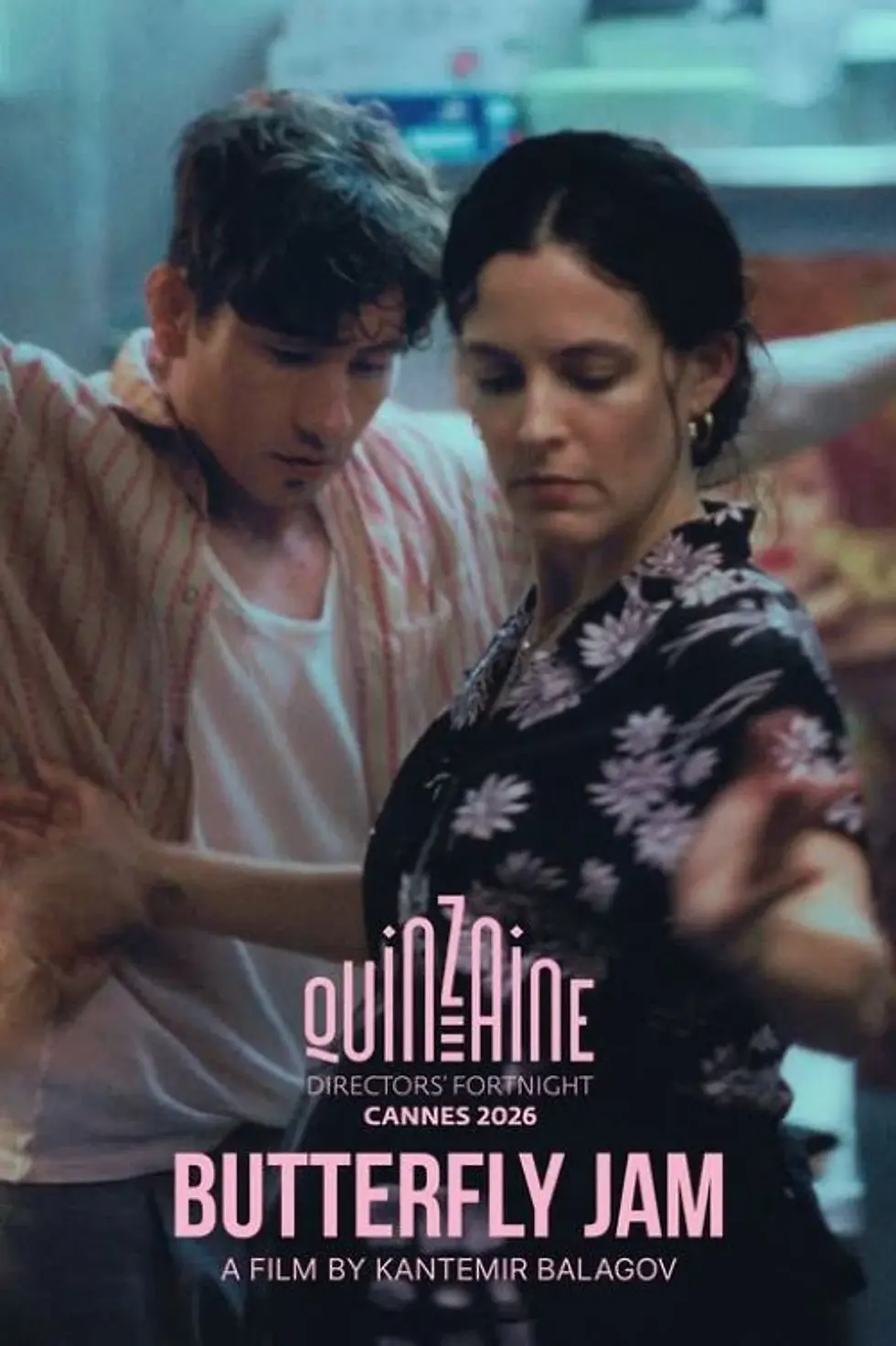
We have in particular fondness for films that open by doing something you have never seen before. Butterfly Jam opens with Barry Keoghan feeding his friends a jam made of insects. He is beaming. He is proud. The friends eat it without complaint. And we were, immediately and completely, in.
Kantemir Balagov's English language debut is the kind of film that announces itself as an event before it has earned the right to be one, and then, quietly and unexpectedly, earns it anyway. Set in Newark's Circassian immigrant community, it follows Azik, a cauliflower-eared diner cook who became a father when he was still a boy and has somehow made peace with a life that most people would describe as small. Keoghan plays him with the mumbling, distracted warmth of a man who is always half inside his own head, and it is one of the best performances we have seen from him. Which is saying something.
The film Balagov has described as "a masculine story told in pink" is. at its heart, about a father and a son who have swapped the expected roles. Temir, a state championship wrestler played by newcomer Talha Akdogan with a quiet, self-possessed gravity, has grown into a strength that makes Azik look like the younger one. He has outgrown his father without knowing what to do with that fact. The film is patient and tender about this reversal in a way that feels genuinely observed rather than constructed.
Where Butterfly Jam earns our real admiration is in the texture of its world. Jomo Fray's cinematography bathes Newark in burnt orange sunlight that makes the city look like a memory of itself. Harry Melling, so unexpectedly subservient in last year's Pillion, is here a coiled, feral force of barely contained powerlessness, and every scene he shares with Keoghan crackles with the specific energy of two people who love each other and would never say so. Riley Keough does what she can with a role the script keeps sidelined, and does it with enough weary grace that you feel the history behind every sigh.

The film's stranger sequences are its most alive. A scene in which Azik hires a sex worker to devirginize his teenage son has no right to be as tender as it is. A moment where Azik and Temir stand on a Newark street admiring every car alarm they have just triggered, laughing in the dark, is the kind of thing that stays with you. And a quietly extraordinary scene involving a pelican, two naked spines, and a bad case of bacne somehow crystallizes what the whole film is trying to do better than anything in the script.
The third act is where Butterfly Jam nearly loses us. The film flirts with the kind of tragic revenge drama that Bakagov's previous work has conditioned us to half expect, and in those moments it feels smaller than it has been. But then it pulls back. It refuses the darkness. It insists, with a stubbornness that feels personal rather than sentimental, on becoming the bittersweet fairy tale it always was. Whether that resolution fully satisfies is an open question. Whether it surprises you is not.
Two days into Cannes, we have now seen two films about people learning to carry grief and history in their bodies. In Waves used the ocean as its metaphor. Butterfly Jam uses a jam jar. We are not sure which is truer to life. We are fairly sure this one made us laugh more, and on reflection we think that matters.
🍿 SCORE = 64/100


Comments