


FORSAKEN Review
- Dan + Julia Reyes
- 1 day ago
- 3 min read

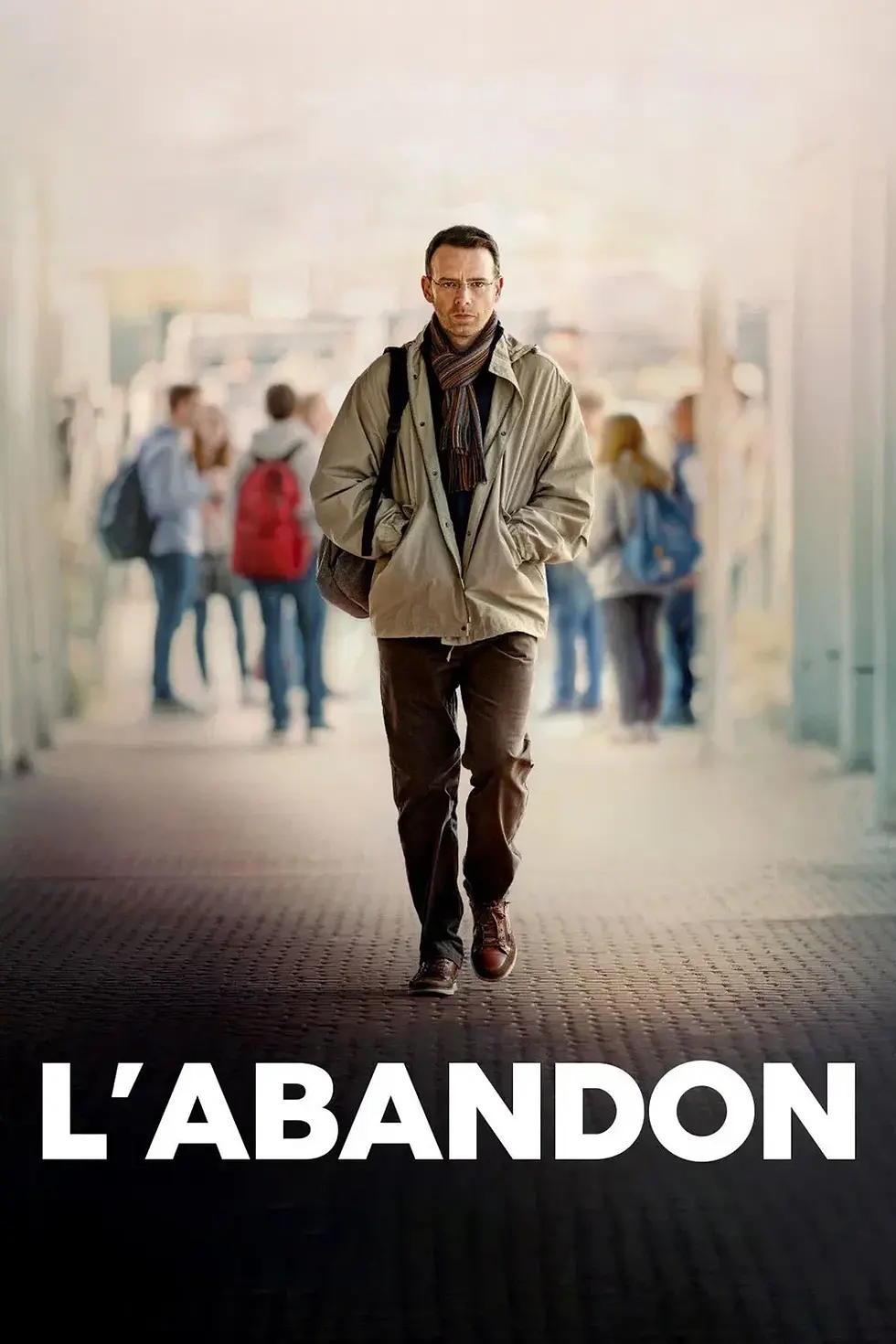
Day three of Cannes begins with the heaviest subject we have encountered at this festival so far. In October 2020, Samuel Paty, a French schoolteacher, was murdered by an Islamist terrorist after teaching a class on freedom of expression and the Charlie Hebdo cartoons. He was 47 years old. He had asked students who might be offended to temporarily leave the room. He was a man trying to do his job thoughtfully, in a country whose founding principles he believed in, and those principles and the country failed to protect him. Forsaken tells the story of his last eleven days. We watched it in the Cannes morning light and walked out into the sunshine feeling the weight of something that no amount of Mediterranean warmth could quite lift.
The subject demands to be addressed. Antoine Reinartz, whom we last admired in Anatomy of a Fall, brings to Paty a quiet, undemonstrative humanity that is the film's greatest strength. Paty was not a crusader or a provocateur. He was a teacher. He taught what the national syllabus required him to teach. He asked for consideration and was given catastrophe instead.
The film opens like Sunset Boulevard, Paty narrating from beyond death. It is the first of several choices that prioritize drama over the cooler analytical detachment this story needed most.
The procedural architecture of Forsaken is carefully built. The film traces how a single lesson became, through social media distortion and the particular combustibility of French debates around secularism and religious identity, a national crisis that left Paty entirely alone. Colleagues distanced themselves. The administrative system moved too slowly. A volatile student's false account traveled faster than any correction could follow. The mechanics of the tragedy are rendered with clarity and a genuine sense of the systemic failures involved.

Where the film struggles is in its characterization of Paty's principal antagonists. The student's father refuses to listen with a bluntness that reads as dramatic convenience. The imam whose involvement escalates the situation is presented in terms so unflattering that the film tips from portraiture into caricature. We understand that Garenq has no interest in softening the depiction of those whose actions led to Paty's death. But melodrama is not the same as honesty, and the heavy rhetorical hand at work in these scenes undermines the film's claim to journalistic objectivity.
A film that addresses these debates at the point of their most tragic convergence has a responsibility to hold the complexity rather than resolve it into heroes and villains. Forsaken does not always honor that responsibility.
There is a France-specific dimension to all of this that we navigate carefully as American observers. The principle of laicite, French secularism, is not simply a policy position but a foundational identity, and the debates it has sparked around religious and racial belonging in contemporary France are among the most contested in the country's recent history. This film has a responsibility to hold that complexity. It does not always do so.
And yet Reinartz's performance stays with us. The scene where Paty realizes, with quiet bewilderment, that the institution he trusted has left him to face this alone is the film's truest moment, and it is devastating in ways the surrounding drama never quite earns. Samuel Paty deserved a film with a cooler eye and a steadier hand. He deserved, as the title says, better than what he got. In life and, perhaps, on screen.
🍿 SCORE = 61/100


Comments