


THE ODYSSEY Review

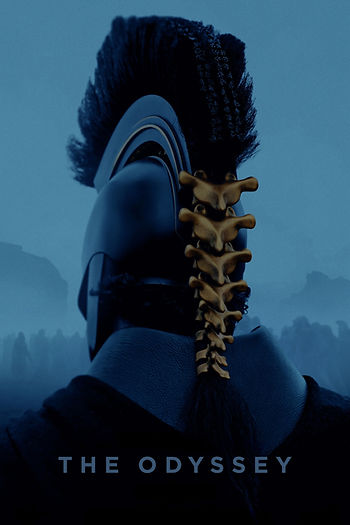
Ten years after his victory in Troy, Odysseus (Matt Damon) has yet to return to his kingdom of Ithaca. In his absence, dozens of suitors have overrun his palace, each hoping to win the hand of his wife, Penelope (Anne Hathaway). Unknown to them, Odysseus is still alive, enduring a perilous voyage where monsters, gods and unimaginable dangers await at every turn.
Homer's Odyssey is one of the oldest and most influential stories ever told. For nearly three thousand years, it has inspired countless works of literature, film and television. Few adaptations have been ambitious enough to attempt fully capturing the scope of the epic. With The Odyssey, Christopher Nolan has created an adaptation less interested in simply recreating Homer's epic than interrogating the ideas that have allowed it to survive for nearly three thousand years.
Nolan has always been infatuated with time. From the backwards chronology of Memento, to the parallel timelines of Dunkirk, Nolan has always played with time as a construct, while never shying away from its inevitability. His films often question whether time can be manipulated, altered, or reversed, but ultimately arrive at the same conclusion: time cannot be stopped, only endured. It is this very idea that makes Nolan the perfect director for The Odyssey. But Nolan's fascination is not just with time itself, but with what those lost years turn us into. Like Bruce Wayne and J. Robert Oppenheimer before him, Odysseus is a Nolan protagonist defined by contradiction: a man whose greatest strengths are inseparable from the destruction they create. He is a heroic man, with extraordinary intelligence and determination. He is a devoted husband, desperate to return home, but also a warrior who leaves a path of destruction at every turn.
It is this moral ambiguity that allows Nolan to take one of the oldest stories known to man and give it a fresh perspective. This is not a simple tale of adventure and triumph, but rather a deeply philosophical examination of identity and the cost of survival. A lot of credit goes to Matt Damon, who delivers one of the finest performances of his career. He brings a fascinating complexity to Odysseus, portraying him as both a heroic general and a noble leader, while also revealing a deeply wounded man haunted by the decisions he has made. While fighting for survival, Odysseus is forced to confront the person he has become and reconcile him with the man he once was.
The flip side of the coin is Penelope. She is the symbol for the emotional destruction that can be caused by time. While Odysseus' journey transforms him through hardship, Penelope's struggle is characterized by waiting. She is forced to live in uncertainty, clinging to the memory of a husband who may never return, while the world around her crumbles. Anne Hathaway plays this wonderfully, fully showcasing the range of hope and acceptance. Her loyalty is admirable, but clearly at a cost to her own well being. The question gradually shifts from whether Odysseus can return home to whether the home he longs for still exists. Time changes the person who leaves, but destroys the world of those left behind.
While Damon and Hathaway provide the emotional foundation of the film, the supporting cast brings Homer’s world to life. Nolan allows his ensemble to embrace the larger-than-life nature of these mythological figures while still grounding them in recognizable human emotions. Robert Pattinson plays Antinous, the primary antagonist, with such a delightfully cruel energy that he borders on caricature, yet Pattinson grounds the character just enough to make him genuinely loathsome. He is almost comically unlikable, but beneath the arrogance and cruelty lies a deeply insecure man who uses power to compensate for his own cowardice. He is the worst combination of malice and weakness.
Samantha Morton plays Circe, a witch Odysseus encounters along his journey, and she is an undeniable scene-stealer. Morton perfectly captures the character’s balance between devastation and vengeance, riding the line between a tragic figure and a dangerous force. Her appearance is undoubtedly one of the film’s highlights. John Leguizamo delivers career-best work as Eumaeus, representing the last remaining sense of purity in Ithaca, though even he begins to slowly lose that innocence as time passes. Elliot Page, Jon Bernthal, Himesh Patel, and Lupita Nyong’o are also excellent, each bringing a distinct presence to Nolan’s expansive world.

The visual language of The Odyssey is fascinating, bringing to life a world that has existed somewhere in the collective imagination for nearly three thousand years. Nolan is not simply adapting Homer’s epic; he is visualizing the images and legends that have been passed down across generations. The depiction of Hades and the Trojan Horse are examples of this, capturing the mythological scale of the story while maintaining a sense of awe and terror. The spectacle is genuinely overwhelming — everything feels monumental, from the vast landscapes to the battles that define Odysseus’ journey.
Hoyte van Hoytema is once again firing on all cylinders, crafting images that feel both timeless and immediate. His cinematography gives the film a sense of grandeur without losing its intimacy, allowing the smallest human moments to exist alongside overwhelming displays of scale. The color grading is impeccable, giving the film remarkable tonal control and allowing each environment to carry its own emotional weight. The warmth of Ithaca, the darkness of the underworld, and the endless blues of the ocean all reflect the different stages of Odysseus’ journey.
The power of The Odyssey is not just found in its images, but in the assembly of them. An understanding of pacing and structure has always been one of Nolan’s greatest strengths, and the editing here faces an enormous challenge. Jennifer Lame has built a terrific career, with her work on Oppenheimer standing among the finest editing achievements of the century. The Odyssey presents a particularly difficult task, as the film is structured around a series of distinct chapters, each carrying its own tone and identity. For the most part, Lame brings these sections together masterfully, but the film's structure occasionally creates an unexpected emotional distance.
The irony is that a film so deeply concerned with the passage of time occasionally struggles to make us feel its weight. Odysseus spends years separated from home, but the fragmented structure sometimes prevents the audience from experiencing that loneliness and exhaustion alongside him. We understand the impact of his journey, but we do not always feel the full cost of it. The nonlinear storytelling reflects the unpredictable nature of Odysseus' voyage, with its constant shifts in setting, tone, and perspective mirroring a journey defined by uncertainty. Yet, at times, the film feels more interested in observing the architecture of Odysseus' journey than allowing us to fully inhabit it.
Lastly, Ludwig Göransson’s transcendent score deserves recognition. Perhaps the most brilliant of his already magnificent body of work, the music of The Odyssey feels like multiple scores existing simultaneously. Göransson seamlessly blends ancient Greek instruments like the aulos and lyre with modern elements such as synthesizers and bronze gongs, creating a soundscape that feels both timeless and entirely new. This collision between ancient and modern serves as a perfect metaphor for what Nolan is attempting with The Odyssey itself. He takes one of humanity’s oldest stories and presents it through the language of contemporary cinema without losing the mystery and power that allowed it to endure for thousands of years. Göransson’s score is a major reason why the film feels both ancient and unprecedented.
After a career exploring the relationship between time, memory, and the human struggle, Christopher Nolan has crafted perhaps his most personal film through one of the most universal stories ever told. The Odyssey is not simply the story of a man's journey home, but of the time lost along the way and the person left behind because of it. This is perhaps Nolan's darkest and most genre-bending film, even venturing into elements of horror, yet it never loses the quintessential ideas that have defined his work from the very beginning.
With breathtaking visuals, extraordinary performances, and a profound understanding of Homer's timeless themes, The Odyssey feels like the culmination of everything Nolan has been working toward. It may very well be his magnum opus. Nearly three thousand years after Homer first told this story, Nolan proves that the greatest myths endure because every generation discovers something new within them. The Odyssey is a monumental cinematic achievement—the definitive adaptation of one of humanity's most important stories.
🍿 SCORE = 94 / 100


Very well-articulated points! It’s inspired me to check out the movie!