


LEVIATHAN Review

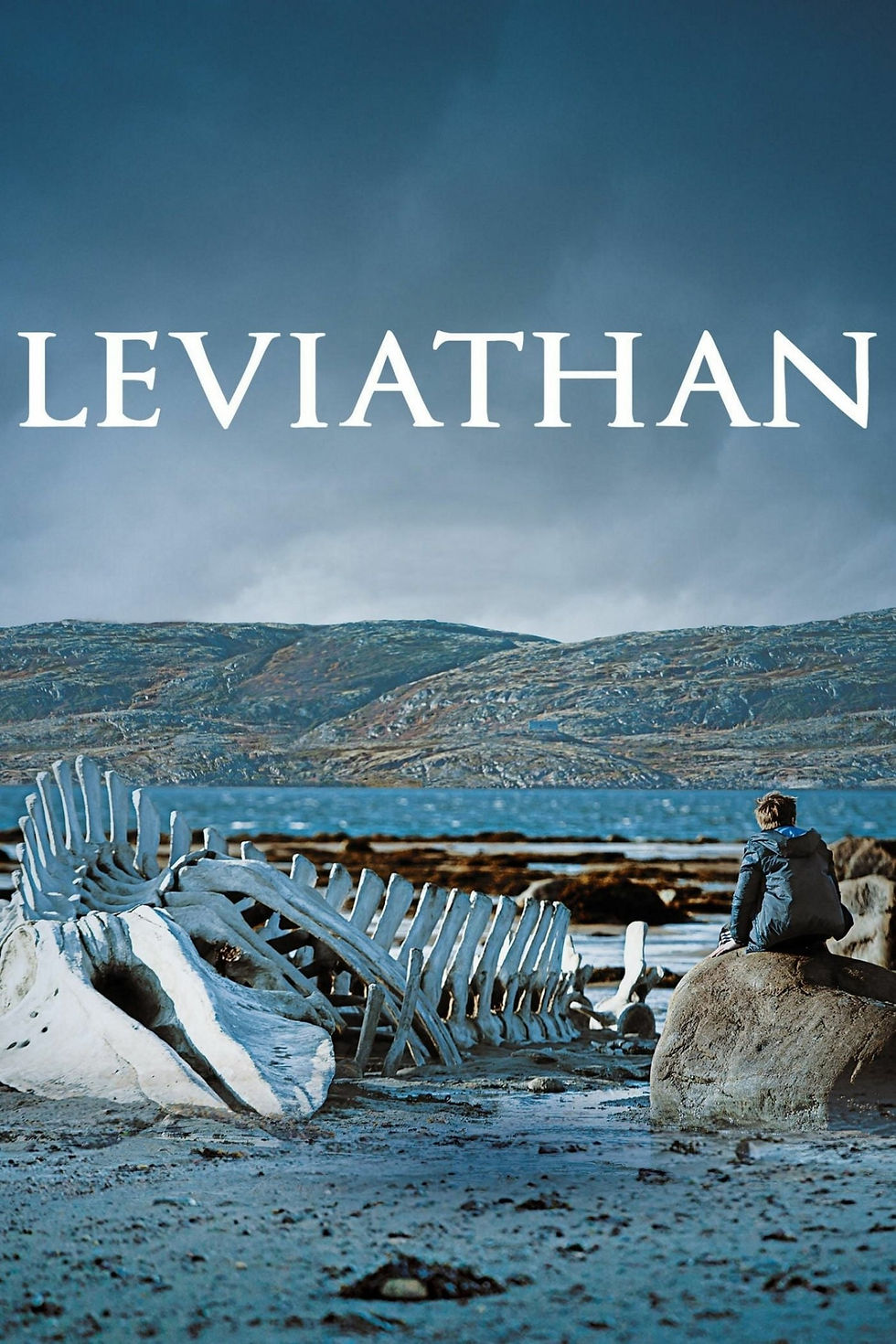
Kolya (Aleksey Serebryakov) is a down-on-his-luck mechanic living in a small seaside town in Russia. He lives with his second wife, Lilya (Elena Lyadova); and his son Romka (Sergey Pokhodaev). The town's corrupt Mayor Vadim (Roman Madyanov) is plotting to seize the beautiful land where Kolya's house sits. The town plans to reimburse him far less than what he is owed, and he calls his old friend Dmitry (Vladimir Vdovichenkov), who has found great success as a lawyer in Moscow, to represent him. The court sides with the mayor, and everything begins to slowly unravel around Kolya.
The dialogue around Leviathan starts with the director, Andrey Zvyagintsev. A fixture at Cannes and other film festivals, his works have become renowned among critics around the world. With works such as The Return (2003), Leviathan (2014), and Loveless (2017), Zvyagintsev has taken home the Golden Lion at Venice, and numerous prizes at Cannes. In 2021 Zvyagintsev developed a severe case of long-form COVID-19, that nearly killed him. The director's newest film, Minotaur, is his highly anticipated return.
In a similar vein to Jafar Panahi, Zvyagintsev has built a reputation for making scathing critiques of his home country with his filmmaking. He has been living in exile around Europe and has stated he will not return to Russia because he can't work freely there.
What follows is as bleak of a glimpse at humanity and power as they come. This film doesn't give you hope. What starts as a straightforward dispute over property expands into a broad examination of the relationship between the modern Russian state and its people. The institutions put in place to serve us begin to work against us whenever it's most convenient for those in power. It remains a poignant statement about the current state of Russia, and those who are in charge. There is a large picture of Vladimir Putin hanging on the office wall of the corrupt mayor.
From a filmmaking standpoint, this film is fascinating. For a film that is so incredibly bleak, it never feels monotonous. Every scene feels intentional, and alive. The cinematography is a huge standout. The landscape is a character of the film, seeing as it is the root of the property disputes. How beautiful the plot of land both is, and is portrayed is a necessity. It establishes the stakes of the situation, without having to unnaturally affect the pace or the tone of the film. The cinematographer Mikhail Krichman does a terrific job of showcasing both the beauty of the landscape and the desperation of those fighting to keep it.

The other true standout for me is the ensemble. Aleksey Serebryakov is brilliant here as Kolya. He is a hard character to root for, as a lot of the holes he finds himself in, he deserves partial or total blame for. He is a lousy and flawed man in a lot of respects. But when the protagonist is experiencing injustice at this level, there are moments when character is thrown out the window, and we just flat out begin to sympathize with him. Serebryakov portrays this masterfully, alternating between rage and despair. Vladimir Vdovichenkov as Dmitry is a really great addition as well. I thought he brought a brokenness to the film that he shares with Elena Lyadova as Lilya. They are missing the same thing from their lives, and it is slowly tearing them to pieces, in a way that they have no choice but to suppress. Very European in its subtlety, and it works wonders.
No conversation about Leviathan is complete without discussing the film's stance on faith. In the Bible, Leviathan is a fire-breathing sea monster that causes chaos and destruction. Zvyagintsev chose to insert a metaphorical Leviathan into the seaside town, and I believe that figure is Mayor Vadim. Through this metaphor, the Russian state becomes godlike. Kolya is not necessarily an enemy of the Russian state; rather, an oppressed man at war with himself. His rage and his pride work against him, but he is no match for the monster heading his way. Mayor Vadim has a bishop as his most trusted advisor, who continually assures him God is on his side, reinforcing the film's critiques of both religious institutions and authoritarian power.
Andrey Zvyagintsev is one of the defining voices in international cinema today. Leviathan is a masterwork: combining breathtaking cinematography, remarkable performances, and a fearless political critique in the face of tyranny, the film cements itself as one of the defining works of the 2010s. In anticipation of Zvyagintsev's Grand Prix-winning Minotaur, there is no better time to revisit—or discover—this modern classic.
🍿 SCORE = 95 / 100


Comments