


TOP 5 FILMMAKERS WHO ARE LIKELY DUE TO WIN THEIR OSCAR


I've already sang the praises of recently overdue veterans, Christopher Nolan and Paul Thomas Anderson, by creating their respective top five lists. As I'm writing this, we're on the eve of the upcoming Fall festival season, where we'll be seeing upcoming award contenders rise and fall. But as we've seen every year, not all the narratives we build up or predict to happen will occur. Anyone remember when certain pundits thought Wicked: For Good would be the next Return of the King at last year's Oscars?
However, I've recently been witnessing directors, who've paid their dues in Hollywood for decades, finally get their own golden boy. From Bong Joon-ho to Sean Baker, they've become newly minted Oscar winners. Even Spike Lee, James Ivory, and Kenneth Branagh may not have won a trophy for Best Director, at least they managed to win one in the writing categories in their respective years.
As we see overdue veterans get their due, we're also seeing various filmmakers, like Richard Linklater or James Mangold, increasing their nomination count but have yet captured their own Academy Award. Those are the filmmakers I want to discuss in this article. At the time of writing this, some of these people I'll be mentioning may have a film or two coming later this year.
It's hard to predict if they'll get their moment in the sun this year or down the road at this time. But we'll have to see what happens. Without further or due, here's my personal five filmmakers I think are due for their moment.
5) Bradley Cooper

I almost wanted to put Mike Leigh on the list, as he is tied with Bradley as the most nominations without a win for a filmmaker at 7 losses; the person currently holding the record for most losses without a win is Diane Warren at 17. And while I could see an argument for the English filmmaker to be on this list, I don't know if Bleeker Street will be able to mount a campaign that could get Mike his overdue Oscar for what's supposedly his final film, Tender Loving Care. Anything is possible, but something to consider: he hasn't gotten nominated by the Academy since Another Year, which was over 15 years ago.
As for Bradley Cooper, I understand this is somewhat cheating as you could argue he could easily win an Oscar for his acting performances; he is still 0 for 5 as an actor (should've won for A Star is Born but I digress). I can see a path for Bradley to win his overdue Oscar as a filmmaker. He would have to not only step away from starring in the film, but he would have to take on a story that doesn't feel so Oscar bait.
In my opinion, Maestro was a terrific film that showcased Bradley as a visual director with his blocking and composition, but many felt it was him trying too hard for the gold. If we've learned anything lately, it's that they don't like it when you're too greedy for it. Just ask Timothée Chalamet if he's got an Oscar or two sitting on his shelf for his performances in A Complete Unknown and Marty Supreme.
I wonder if Bradley has learned the hard way he can't do that if he wants his peers to respect him. I have been noticing lately he's been focusing on building up his resume as a director rather than trying to impress the Academy, by making Is This Thing On? or the Ocean's Eleven prequel; both sound like challenging films for him as a storyteller on the page and on-set directing.
Maybe the film that gets him a win as a director could be an action film? It could be the key to get himself a Best Director nod, as neither A Star is Born nor Maestro managed to snag him the nomination. Whether it's for his directing, writing, or acting, I hope one day this man gets his due. Bradley: if you're in need of some ideas for that action film, call me!
4) Greta Gerwig
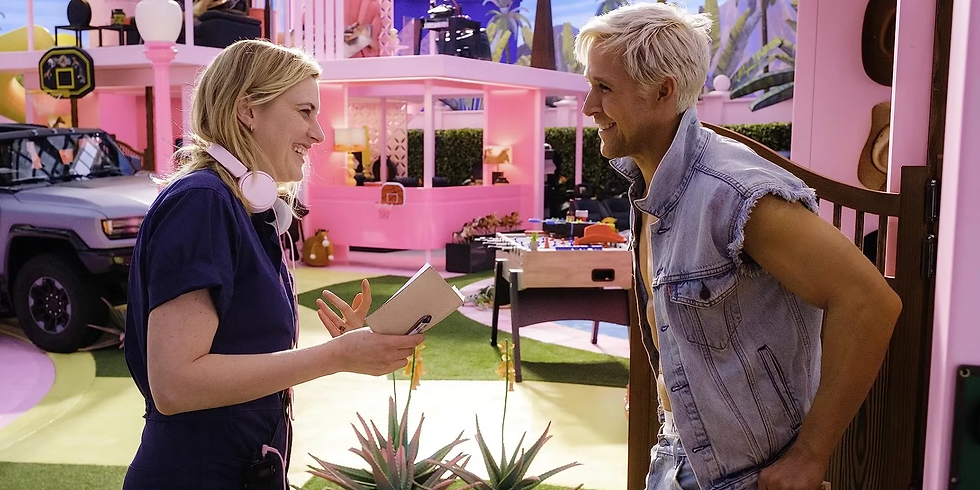
Going from one actor-turned-director to another, Greta Gerwig has become quite a talented filmmaker. Her directorial debut was Nights and Weekends, which she co-directed with Joe Swanberg. Then she kept on acting in various films, including ones directed by Noah Baumbach such as Frances Ha and Mistress America. It wasn't until her solo debut came out in 2017 with Lady Bird.
Not only was this a box-office hit, but it got her a Best Director and Original Screenplay nomination. Unfortunately, she went home with no wins, but the film did put her on the map as a director to keep eyes on what she does next. Her next job was to adapt Louisa May Alcott's novel, Little Women, in her own way. While this didn't get Greta another Best Director nod, it did get herself a Best Adapted Screenplay nomination.
But sadly, she came home without a win. Then her next job as a director was to tackle an intellectual property that's been passed around to various filmmakers with Barbie. Not only was this a critically acclaimed movie, but it became a box-office hit thanks to its "Barbenheimer" impact; you can thank editor-in-chief of Next Best Picture, Matt Neglia, for that coined term.
So, maybe this was Greta's time for the win in Best Adapted Screenplay, right? Unfortunately, she went 0 for 4 as American Fiction won the writing category. I do think her time will come, as she's challenging herself albeit it's within the more known IP. The directing branch has a history for being picky with nominating people, who dabble in that territory and tend to go for the more international flare or one with a more distinct visual style. If she wants to get back into the directing category, she might have to go back to the drawing board and craft an original story for voters to be impressed with.
If nothing else, I can see her win a writing Oscar, as she's able to nail down dialogue incredibly well for children and adults. I don't know if Narnia: The Magician’s Nephew will get recognized for awards next season, but that'll be a door we don't need to open until that time comes. Either way, her future is looking pretty good.
3) Yorgos Lanthimos

Over the years, Yorgos Lanthimos has won his fair share of prizes. He's won the Golden Lion at the Venice Film Festival, the Silver Medallion at the Telluride Film Festival, and various prizes at the Cannes Film Festival. So, what's something Yorgos doesn't have? His very own Academy Award.
The Greek filmmaker's films were first recognized with Dogtooth, scoring a Best International Film nomination. While the film didn't win the prize, it would take Yorgos until The Lobster to get his own Oscar nod with frequent collaborator, Efthimis Filippou. While he didn't have much of a chance winning that night, he would go on to direct The Favourite. Not only did this start an interesting collaboration with Emma Stone, but the film scored a Best Picture and Director nomination for the filmmaker.
Outside of a shocking upset in Lead Actress for Olivia Colman, the film walked away with no wins at the Oscars. Yorgos' most successful film to date was Poor Things. Not only did this score double-digit nominations, but it even won four Oscars: Best Lead Actress, Makeup and Hairstyling, Production Design, and Costume Design. It even became the director's highest-grossing film, making over $117 million worldwide.
A few years after this, Yorgos would come back into the awards conversation with Bugonia. While it was a commercial failure for Focus Features, the film still got nominated for Best Picture, Lead Actress, Adapted Screenplay, and Original Score. It got shut out on the night, but I don't think even he was expecting the film to hold Academy voters' attention.
So, what does Yorgos do at this point to win his first Academy Award? If you've noticed a pattern, he tends to work best with Emma Stone as his muse. Specifically, their work together on The Favourite and Poor Things, as those were co-written by Tony McNamara. As I said earlier in the article, we've seen filmmakers recently win Best Director when they have their hand in the writing "cookie jar".
What's even stranger is that whenever Yorgos does try to write his own work, it tends to not go over well for Academy voters. Even Dogtooth and The Lobster only scored a single Oscar nod each. I can easily see the man get his due for maybe a twist-and-turn screenplay with intriguing social commentary, like we saw in Anatomy of a Fall or Parasite. I do think he can do it, as he might've won an Oscar or two on Poor Things had Oppenheimer not qualified for that year's awards run. For now, he'll have to settle for being a 6-time Oscar loser, as opposed to having the title, "Academy Award Winner Yorgos Lanthimos".
2) Denis Villeneuve

Speaking of international directors, Denis Villeneuve has had several films of his score well with Academy voters. Incendies netted itself a Best International Film nomination (ironically the same year as Dogtooth), Prisoners got a lone Best Cinematography nomination, and Sicario scored three nominations for Best Original Score, Cinematography, and Sound Editing. It wasn't until Arrival where we saw a film by Denis do incredibly well getting eight nominations, including Best Picture and Director. Unfortunately, it was in the Best Sound Editing category that got itself a lone win.
His next film, Blade Runner 2049, was a box-office disappointment but it scored five Academy Award nominations and won two: Best Visual Effects and Cinematography. What makes this an important moment is that it became Roger Deakins' first win on his 14th nomination. I believe a lot of it came from the fact that he was an overdue veteran but was also working on a technical marvel with a known IP like this. If nothing else, this and Arrival likely put eyes on Denis as a visionary filmmaker to tackle the Frank Herbert novel, Dune.
After numerous delays from development hell and the pandemic shifting a bunch of theatrical releases, Dune: Part One score critical acclaim and box-office success. The film earned itself a whopping ten Oscar nominations, winning 6 for Best Film Editing, Cinematography, Production Design, Original Score, Visual Effects, and Sound. Denis, himself, only got in for Best Picture as a producer and Best Adapted Screenplay. He would go on to get another Best Picture nomination for its sequel, Dune: Part Two, which only won Best Visual Effects and Sound.
So, that leads us to a few questions: first off, how can Denis Villeneuve not get into Best Director for the Dune films? As I said for Barbie, the directing branch can be quite picky with their choices. I will say that Denis' style does fit more in line with what the branch typically nominates, but they still see these films as populist, blockbuster flicks that are technical achievements. It is helpful that he's now co-writing his own films, as that's been a trend the branch like to nominate lately.
Second off, will Denis get his flowers for Dune: Part Three? As of now, I have no idea how the reception of the third film will be with voters. For all we know, it could decrease in nomination count like the Avatar films. If Denis can score another nomination for it, that'll just increase the number of total nods he's got on his belt. But the biggest thing I've noticed is that he's yet to get a film of his nominated for acting categories.
Outside of The Dark Knight, it took Christopher Nolan until Oppenheimer to get something that appeals to the actors' branch. That might be what Denis needs to do: find a story in which it utilizes his directorial style effectively, while showcasing the acting ensemble's talents. Not saying Denis is bad at directing his actors; far from it. But he's directed within the genre that voters have issues with connecting emotionally, particularly in the sci-fi genre.
Maybe when he closes the book on these Dune movies, he can shift his focus on something challenging that fits his flare as a storyteller. What exactly that may be? I don't know. All I know is that he might be able to score that Oscar win if he can direct a movie that appeals to Academy voters.
1) David Fincher

While this may be considered a lost cause to advocate, David Fincher has become one of my favorite directors of all time. Even if his more recent work isn't considered his strongest films to date, he's still one-of-a-kind artist. What started off on a bad note with Alien 3 to where he's disowned it to this day, it did score a Best Visual Effects nomination. His next two films that scored technical nominations were Se7en and Fight Club in Best Film Editing and Sound Editing, respectively.
It wasn't until The Curious Case of Benjamin Button, where David would be taken seriously by the Academy. The film scored 13 nominations, including Best Picture and Director. However, it would only go home with 3 technical Oscars: Best Visual Effects, Makeup/Hairstyling, and Production Design. His next film, The Social Network, got a whopping 8 Oscar nominations; this was the closest David ever got to getting an Oscar win, as he won the Golden Globe, Critics' Choice Award, and BAFTA for Best Director. Unfortunately, he lost to Tom Hooper, who also won the DGA prize for his work on The King's Speech.
The next year, David was not nominated at the Academy Awards, but his film, The Girl with the Dragon Tattoo, scored 5 Oscar nominations: Best Lead Actress for Rooney Mara, Cinematography, Sound Mixing, Sound Editing, and Film Editing; the latter category became the film's sole win on the night and was considered a shocking upset, as it beat out four Best Picture nominees in the lineup. After this, David's next film, Gone Girl, started off as a possible strong contender early in the season. Unfortunately, the hype eventually died down and received one nomination for Rosamund Pike in Best Lead Actress.
His next project would have him direct a screenplay written by his late father, Jack Fincher, with Mank. This time, David worked with Netflix to distribute the film and garnered 10 Academy Award nominations, including Best Picture and Director; the late screenwriter did not receive his own Oscar nomination in Best Original Screenplay. However, the film would go on to win 2 Oscars: Best Production Design and Cinematography. Still, David walked away from the night with no wins. At 3 Oscar nominations and no wins, how exactly can he win his own trophy?
Well, I believe that he can win his own competitive Oscar in the one category that might get him his due: Best Animated Feature. The reason I bring up this category is that David Fincher has executive produced and directed two episodes of Love, Death, & Robots, which has gained critical acclaim and won an Emmy. Granted, these are short films that he's helped advocate. However, for a perfectionist storyteller who keeps playing in the sandbox, this could be his goal to getting him that Academy Award win.
The category has also evolved to honoring visionary directors that are respected by the voters, particularly the international branch. As we've seen lately, the voters have passed over the more populist films and have gone for more unique voices.
Guillermo del Toro's Pinocchio beats Puss in Boots: The Last Wish
The Boy and the Heron beats Spider-Man: Across the Spider-Verse
Flow beats The Wild Robot
David has recently been working with Netflix lately, as The Killer and The Further Mis-Adventures of Cliff Booth are distributed by the streaming company. So, maybe he can work a deal to get an animated film of his choosing off the ground, and bring it to an audience Netflix is willing to push out there for voters.
At this point, I'm just spit balling on what could get David Fincher his gold trophy. For all we know, this Cliff Booth-spinoff could do the trick for him. I doubt it, but I've been surprised before. I just hope that somewhere down the road the Academy finally gives him his due. Otherwise, they're going to look like fools for not giving this man his own Oscar.
Conclusion
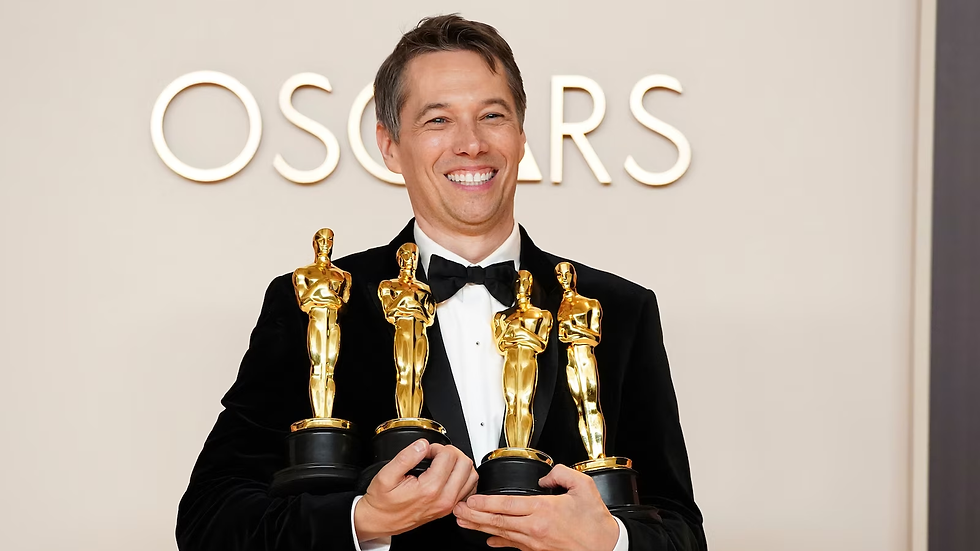
With each season, we see certain filmmakers and actors get their long overdue statue. Some of which happen to get their wins on their first try, with Sean Baker being a recent example. And while we could see someone like David Fincher or Mike Leigh come back into the awards race this season, it'll be interesting to see if they can go the whole nine yards. Or will they fall short of a victory win?
All I know is that each season has a story to tell. Some narratives we see unfold before our very eyes tend to work out. And others just don't even exist to where we forget they even happened by the time we get to the next season. Already, we're hearing great things from Venice and Telluride, with films like Wild Horse Nine and The Debut getting terrific reactions. It'll be interesting to see who the next overdue filmmaker could be to get their own Academy Award.


Comments