


PRIMETIME Review

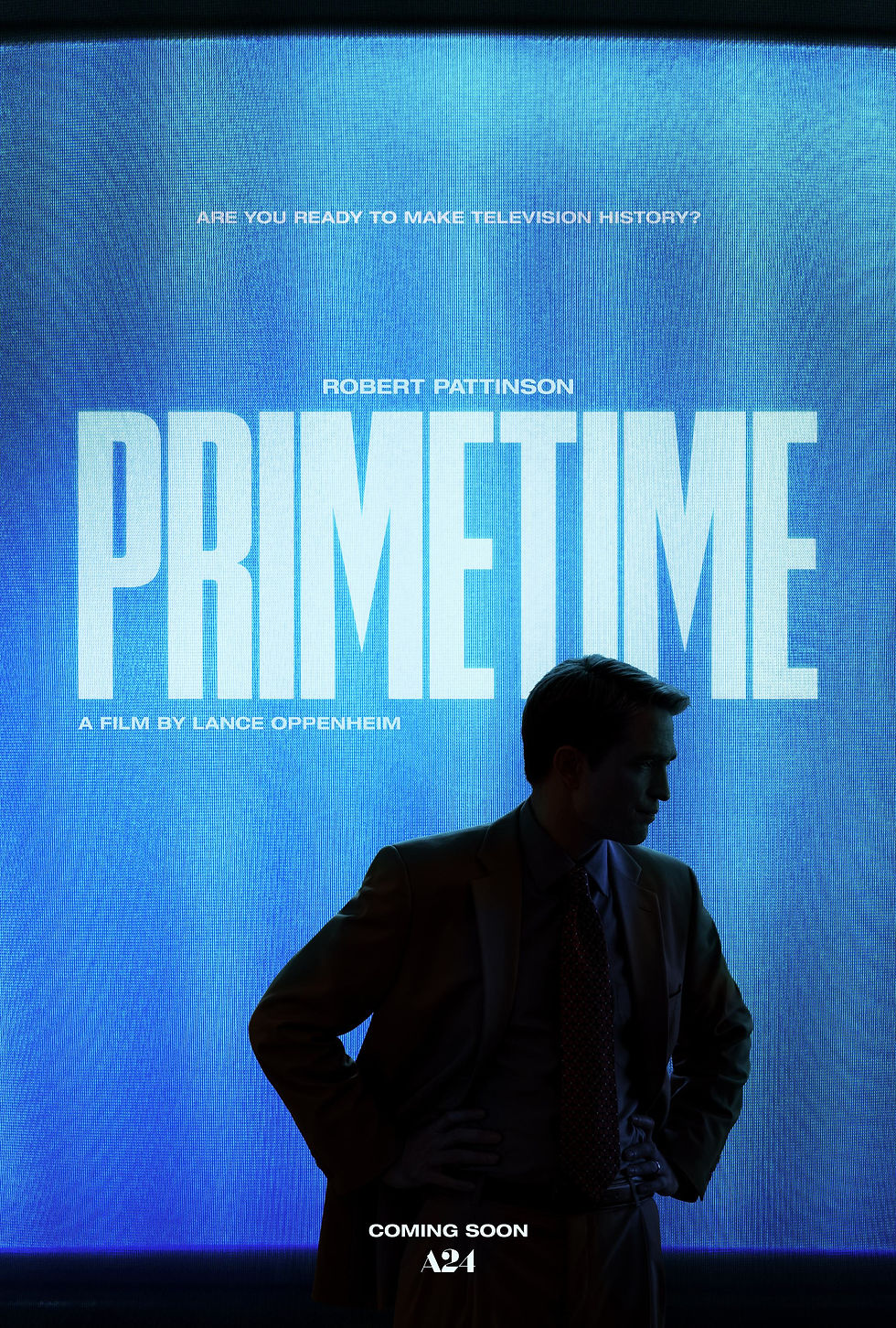
In 2006, journalist Chris Hansen (Robert Pattinson) hosts To Catch a Predator, a Dateline NBC series where he joins forces with anti-pedophile activists to conduct sting operations. He and his producer, Andie Bender (Merritt Wever), lure suspected child predators into houses using actors as decoy children. Aspiring actor Dan Plum (Skyler Gisondo) is recruited to join the team, and after a skeptical start, he truly becomes "Decoy Dan," Hansen's go-to and most reliable asset. To Catch a Predator becomes a huge hit, and NBC head Jeff Zucker has no choice but to move it into a primetime slot. Hansen's ego, drive for ratings, and genuine interest in world purification become so intertwined that it becomes difficult to decipher which one is most important to him.
Primetime is the narrative feature debut of acclaimed documentary filmmaker Lance Oppenheim. Known for an eclectic, non-traditional visual style, he seamlessly transitions to narrative filmmaking. The film blends fact and fiction in a way that makes it almost difficult to tell which is which, and the imagery helps convey that tonal balance. Primetime is genre-bending, and a difficult film to label as anything. Just as Hansen's intentions are hard to pinpoint, it's hard to know how you're supposed to feel while watching.
Two of the primary takeaways will undoubtedly be the cinematography and the editing. Both are big and showy. Cinematographer David Bolen captures the lo-fi, anxiety-riddled aesthetic of mid-2000s American media. The film plays as a surrealist fever dream, largely because of the way it looks. It feels as though the entire country operated in a post-9/11 haze that impacted everything, nothing more so than our television. The film is edited like a documentary, which makes sense given editor Daniel Garber's background working with Oppenheim. It has been described as "method editing," a collage of archival footage and constantly shifting narrative perspectives. The film moves at a jarring, almost uncomfortable speed that adds to the overall unease.
The ensemble cast is really strong. Robert Pattinson just continues to prove he is one of the greatest actors of his generation. His facial expressions in this are killer; he really captures this angst and moral conflict that should apply to Hansen. Skyler Gisondo is a huge breakout here, playing an incredibly vulnerable and misguided character. His naivety and desperation are on full display as he navigates this world of semi-acting. Merritt Wever is just absolutely brilliant. Hers is the most subdued and layered performance in the film. She is the heartbeat of the film, and her performance is rock solid.

The film's perspective on the events at hand is perplexing. All of the characters are being driven to the point of madness by their individual pursuits, masked as a search for the greater good. Alongside narrative and perspective shifts, the viewer's sympathies shift too. Who are the bad guys? Should we feel any slight sort of sympathy for the predators? Should we justify the at-times abhorrent actions of Hansen and his team because they are in pursuit of a just cause? These are questions the film wrestles with endlessly.
I think this can be considered a drawback in a way, as it does leave the film feeling somewhat convoluted. Chris Hansen himself walked out of the film and said he didn't understand its point. On the one hand, of course he would say that about a film he probably wishes was never made, but on the other hand it is a valid question to ask. If someone was torn on the ethics of To Catch a Predator, they likely didn't walk out of this film with an answer.
Lance Oppenheim is a talented and exciting young director who clearly has a singular style. Primetime may not provide easy answers to the questions it raises, but I think that ambiguity fits the world the film is depicting. There are certainly moments where the film's ambitions get in the way of its clarity, but I would much rather watch a filmmaker take big swings like this than play it safe. Oppenheim has a really clear vision for what he wants this movie to be, and the way he blends documentary techniques, archival footage, and narrative filmmaking makes Primetime feel like something I haven't really seen before. It's a weird, messy, ambitious movie, but there is so much to admire in what Oppenheim is trying to do.
🍿 SCORE = 81 / 100


Comments